
Introduction
Going through a family change is rarely easy, and deciding where a child will live can feel deeply overwhelming for everyone involved. Parents naturally want what is best for their children, but navigating complex court rules and legal terms can create significant stress.
A qualified child custody lawyer can help make this legal process much clearer by explaining your rights and guiding you step-by-step. Whether you are working toward a peaceful agreement or preparing for a formal court hearing, having the right information helps you protect your relationship with your child. Bestlawyernow.com offers helpful legal resources to assist parents in exploring their options and finding suitable support.
What Does a Child Custody Lawyer Do?
A child custody lawyer helps parents understand their rights and responsibilities during a family law matter. They provide clear guidance on how custody arrangements work and represent parents during court hearings or negotiations. A lawyer can draft legal documents, gather helpful records, and help parents communicate effectively with the other party.
Their main goal is to advocate for a solution that prioritizes the child’s well-being while keeping parents fully informed throughout every stage of the legal process.
Understanding Common Child Custody Arrangements
Custody arrangements define where a child will live and who will make major life decisions for them. Because laws vary by location, it is important to understand general terms before looking at local rules.
Types of Custody
Physical custody determines where the child lives day-to-day. Legal custody gives a parent the right to make important decisions about health, education, and upbringing. Both types can be shared or given to one parent.
| Custody Term | General Meaning |
| Physical Custody | Refers to the physical home where the child lives and spends their daily routine. |
| Legal Custody | Refers to the authority to make major life decisions regarding health, education, and welfare. |
| Joint Custody | Shared arrangement where both parents share physical or legal responsibilities. |
| Sole Custody | Arrangement where one parent holds primary physical or legal decision-making authority. |
When Should You Hire a Child Custody Lawyer?
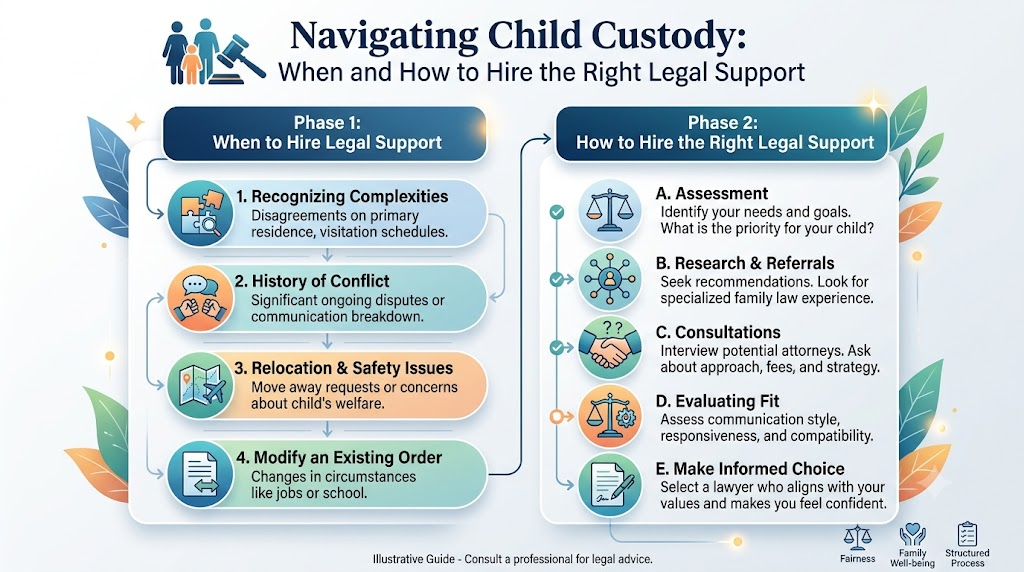
You may want to hire a child custody lawyer if you and the other parent cannot agree on a parenting schedule. Legal help is also valuable if the other party has hired a lawyer, or if complex issues like moving away or safety concerns are involved. Even if you hope to reach an agreement outside of court, consulting a professional ensures your rights are protected.
Preparing for a Consultation
When you meet with a lawyer, bring relevant documents such as school records, medical histories, and past communication logs. Prepare a list of questions about their experience, how they charge for their services, and what steps your case may involve. Being organized helps your lawyer understand your situation quickly and give relevant advice.
Choosing the Right Child Custody Lawyer
Selecting the right legal professional is a personal decision that requires careful thought. You want someone who listens to your concerns and communicates clearly.
| Factor to Consider | Why It Matters |
| Relevant Experience | Ensures the lawyer understands family law and local court practices. |
| Clear Communication | Helps you understand legal updates and feel supported throughout the process. |
| Fee Structure | Prevents unexpected costs by clarifying hourly rates or flat fees upfront. |
| Availability | Ensures your lawyer has enough time to dedicate to your case. |
General Steps in a Child Custody Case
Every legal matter follows a specific sequence, though the exact timeline depends on local court rules. First, one parent files official documents to open the case. Next, both sides share information and may attend mediation to try to reach an agreement. If an agreement is not reached, the case moves to court hearings where a judge makes a final decision based on the child’s best interests.
Common Mistakes Parents Should Avoid
During a custody matter, emotions can run high, leading to choices that might hurt your case. Avoiding certain pitfalls helps protect your relationship with your child and keeps your legal standing secure.
- Ignoring Court Orders: Always follow temporary or final court schedules, even if you disagree with them.
- Failing to Keep Records: Document important dates, schedule changes, and communication clearly.
- Sharing Case Details Publicly: Avoid posting about your case on social media or discussing details with people who are not involved.
- Making Decisions from Anger: Keep your focus on your child’s needs rather than personal conflicts with the other parent.
Frequently Asked Questions
When should a parent hire a child custody lawyer?
Parents often choose to hire a child custody lawyer when negotiations with the other party break down or when formal court filings become necessary. Having professional legal support is also valuable if the other parent has legal representation or if complex disputes arise regarding relocation, scheduling conflicts, or protecting the child’s daily routine.
What questions should I ask during a consultation?
During your initial meeting, you should ask about the lawyer’s specific experience handling family law matters and local court procedures. It is also wise to inquire about their preferred communication style, how they bill for their services, and what realistic next steps you should expect in your case.
What documents should I bring to my first meeting?
Bringing organized records helps your lawyer evaluate your situation much faster and provide more accurate guidance. Useful items to gather include recent report cards, medical visit summaries, logs of past parenting schedules, and any existing legal agreements or court notices.
How do lawyers charge for child custody cases?
Most family law attorneys bill clients using an hourly rate deducted from an upfront retainer fee, while others may offer flat fees for specific drafting tasks. Always review and discuss the fee agreement thoroughly before signing so you understand how billable hours and extra costs are calculated.
How are child custody arrangements decided?
Courts determine custody arrangements by focusing primarily on what serves the best interests of the child. Judges evaluate factors such as each parent’s daily involvement, the child’s established school and home routine, and the overall stability each household can provide.
Can parents agree on custody outside of court?
Yes, many parents successfully resolve their differences through direct discussions or professional mediation sessions. Once both parties agree on a schedule, a judge can review the terms and sign off to make the agreement an official court order.
Do local laws affect child custody cases?
Yes, family laws, filing deadlines, and court rules vary significantly depending on your country, state, and local jurisdiction. Because rules are not universal, reviewing local guidelines with a qualified professional is essential for accurate compliance.
Can a lawyer guarantee a specific custody outcome?
No legal professional can ever guarantee a specific court outcome or judge’s decision. A qualified lawyer can guide your strategy and advocate strongly for your position, but the final ruling rests entirely with the court based on the evidence presented.
Conclusion
Navigating a child custody matter requires patience, careful preparation, and a strong focus on your child’s well-being. Understanding different custody arrangements, knowing when to seek professional help, and avoiding common missteps can make a significant difference. Always remember that laws vary by location, so consulting a qualified local lawyer is essential for personalized advice. Bestlawyernow.com provides reliable legal information to help parents explore their options and connect with suitable support as they take the next steps.