
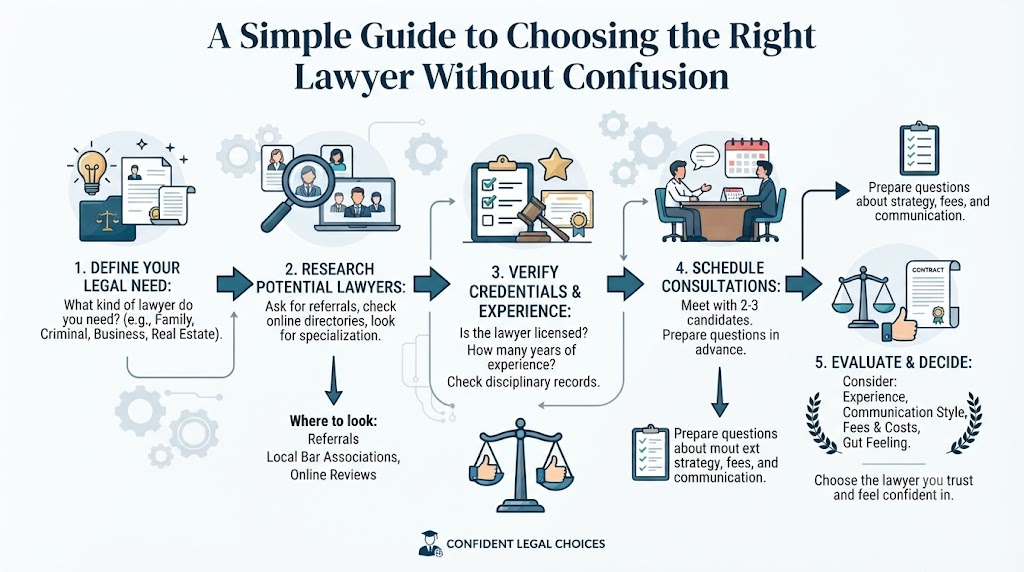
Introduction
Finding yourself dealing with a legal issue can feel overwhelming, especially if it is your first time navigating the legal system. Whether you are facing a family dispute, setting up a new business, dealing with property papers, or sorting out an employment issue, having the right guidance makes a world of difference. Many people make the mistake of picking the first name they see online or choosing solely based on who charges the least. However, legal matters require careful thought. Choosing the right lawyer means looking at more than just a nearby address or a price tag. You need someone whose practice area matches your problem, whose experience fits your specific situation, and who communicates clearly so you always know what is happening. Taking the time to compare a few different legal professionals helps you make a better, more confident choice for your case.
Understand Your Legal Problem First
Before you start searching for legal help, take a step back and try to understand the basic nature of the problem you are facing. Legal issues come in many forms, and each area requires a different set of knowledge and experience.
Here are some common types of legal issues:
- Family matters: Issues like divorce, child custody, adoption, or property division among relatives.
- Property matters: Disputes over land, house buying and selling, rental agreements, or builder delays.
- Business matters: Setting up a company, drafting partnership agreements, or handling business disputes.
- Employment issues: Unfair dismissal, unpaid wages, or workplace discrimination.
- Contract issues: Broken agreements, vendor disputes, or service contract disagreements.
- Criminal matters: Facing criminal charges, police notices, or defense requirements.
- Immigration matters: Visa applications, permanent residency, or green card paperwork.
- Personal injury matters: Accidents, slip-and-fall injuries, or claims for compensation.
- Estate and inheritance matters: Making a will, handling trusts, or distributing family assets.
Different legal issues require very different types of legal experience. A lawyer who spends all their time handling business contracts may not be the best fit for a family custody dispute. Always encourage yourself to speak with a qualified lawyer about your specific situation rather than trying to guess the legal steps on your own.
Choose a Lawyer Who Handles Your Type of Case
Once you have a clear idea of your legal problem, you need to look for a lawyer who regularly works on similar cases. In the legal field, practice areas matter a great deal.
When evaluating a lawyer, look closely at:
- Practice area: Their primary focus and daily work.
- Type of legal issue: Whether they routinely handle cases similar to yours.
- Similar cases: Their history with resolving matters like the one you are facing.
- Relevant experience: How well they understand the specific laws governing your situation.
- Local legal rules: Their familiarity with regional or court-specific rules that might affect your case.
A lawyer who frequently handles your exact type of legal issue will already understand the common steps, potential challenges, and paperwork involved. This familiarity can save time and help keep your case moving smoothly.
Check the Lawyer’s Location
Location plays an important role in many legal matters. Laws, court locations, and regional regulations can change depending on where you live or where the incident took place.
When looking at location, consider:
- Local laws: Rules and regulations specific to your city, state, or region.
- Court location: Where legal paperwork must be filed if your case goes to court.
- Where the issue happened: The physical place where the dispute or event occurred.
- Where you live: Your current place of residence, which can affect jurisdiction.
- Where the lawyer practices: Ensuring the lawyer is officially licensed and allowed to practice in the relevant jurisdiction.
Check whether the lawyer has experience handling matters in the specific location that applies to your case, as local court procedures can often influence how things proceed.
Check Experience and Professional Background
Experience is more than just the number of years a lawyer has been practicing. It is about the quality and relevance of the work they have done during that time.
When looking at a lawyer’s background, check:
- Years of practice: How long they have been active in the legal profession.
- Main areas of work: The specific types of cases they take on most often.
- Case history: The variety and complexity of matters they have successfully managed.
- Professional background: Their training, education, and standing in the legal community.
- Qualifications: Any special certifications or training related to your specific legal issue.
Focus on finding someone whose background matches your specific legal need. More years in practice does not automatically mean a lawyer is the right fit for your particular problem if their focus is in an entirely different area.
Read Reviews Carefully
Client reviews can offer helpful insights into what it is like to work with a lawyer. However, you should read them thoughtfully rather than relying on a single comment.
When looking at reviews, pay attention to:
- Number of reviews: A healthy mix of feedback gives a more accurate picture than a single glowing or negative comment.
- Recent reviews: Feedback from recent months is usually more relevant than reviews from several years ago.
- Detailed reviews: Look for comments that explain how the lawyer communicated, handled paperwork, or explained fees.
- Common feedback: Notice if multiple clients mention the same strengths or weaknesses.
- Professional behavior: Look for mentions of punctuality, honesty, and clear explanations.
Remember that reviews are only one part of your decision-making process. Use them to gauge client satisfaction, but make your final choice based on a complete evaluation of your needs.
Compare Lawyer Fees and Costs
Legal services come with costs, and understanding those costs upfront helps you avoid unpleasant surprises later.
When discussing fees, be sure to cover:
- Consultation fee: What the lawyer charges just to sit down and discuss your case for the first time.
- Hourly fee: Whether they charge by the hour and what their hourly rate is.
- Fixed fee: If they charge a flat rate for specific services, such as drafting a simple contract.
- Other possible costs: Court filing fees, document printing charges, or fees for expert opinions.
- Payment terms: When payments are expected and whether installment options are available.
- Extra charges: Any hidden or unexpected expenses that might pop up during the process.
Always ask the lawyer to explain clearly what the quoted fee includes. Avoid choosing a lawyer solely because they are the cheapest option, as quality and experience are vital for getting proper guidance.
Check Communication Before Hiring
Clear and open communication is essential when working with a lawyer. If a lawyer is hard to reach or uses confusing language that you cannot understand, the process will become much harder than it needs to be.
Before hiring, pay attention to:
- Explanation clarity: Whether the lawyer explains things in simple, everyday language.
- Question handling: How patiently they answer your initial questions.
- Response speed: How quickly they get back to your calls or messages.
- Next steps: Whether they clearly outline what will happen moving forward.
- Listening skills: Whether they listen carefully to your story without interrupting.
Choose someone who makes you feel heard and who communicates in a way that puts you at ease.
Check Consultation Options
Lawyers offer various ways to connect with clients depending on modern convenience and the nature of the case.
Common consultation formats include:
- Online consultation: Speaking via web portals or digital platforms.
- Phone consultation: A direct voice call to discuss basic details.
- Video consultation: Face-to-face meetings using video apps.
- In-person meeting: Sitting down at the lawyer’s office for a traditional discussion.
- Written communication: Exchanging details via email or secure messaging.
Choose a format that fits your schedule and comfort level. Keep in mind that some complex legal matters work best with an in-person meeting, while initial questions can often be handled easily over a quick phone or video call.
Ask Questions Before Hiring a Lawyer
An initial consultation is your chance to interview the lawyer just as much as they are evaluating your case. Asking the right questions helps ensure you are making an informed choice.
Consider asking:
- Have you handled cases like mine before?
- Do you regularly work in this legal area?
- Can you handle matters in my specific location?
- What information should I provide to get started?
- What documents should I bring to our next meeting?
- How do you charge for your services?
- What does the quoted fee include?
- How will we communicate throughout the process?
- What are the expected next steps?
- Who will actually handle my matter day-to-day?
Keep your questions simple and direct so you get clear, straightforward answers.
Prepare Your Documents Before the Consultation
Being prepared for your first meeting saves time and helps the lawyer understand your situation much faster.
Make sure to collect and organize:
- Contracts or agreements related to the dispute
- Legal notices received or sent
- Court papers or official government documents
- Relevant emails, text messages, or written notes
- Property deeds, titles, or lease papers
- Important dates and a timeline of events
- Previous legal records or correspondence
Prepare documents that directly relate to your legal issue. Never alter, hide, or fabricate facts, as honesty is crucial for getting accurate guidance.
Compare Several Lawyers Before Making a Choice
It is rarely a good idea to hire the very first lawyer you speak with unless it is an absolute emergency. Comparing a few different options gives you a better perspective on what is available.
Compare factors such as:
- Practice area and focus
- Relevant experience with similar cases
- Office or practice location
- Communication style and friendliness
- Client reviews and overall feedback
- Available consultation types
- Fees and payment structures
- Overall availability and responsiveness
Look at the complete picture rather than making a choice based on a single detail like price or proximity.
How BestLawyerNow.com Can Help
Finding reliable legal guidance does not have to be a stressful chore. Platforms like BestLawyerNow.com are designed to make the search for legal help much simpler and more accessible.
By using the platform, you can:
- Easily search for legal professionals across different practice areas
- Explore various legal topics to understand your rights and options
- Connect with lawyers online for initial guidance
- Review different consultation options that fit your schedule
- Streamline your search for local legal support
The platform focuses on making it easier for everyday people to connect with qualified professionals without confusion or hassle.
Common Mistakes to Avoid
Avoiding common pitfalls can save you time, money, and frustration during your search for legal help.
- Choosing a lawyer only because they are nearby: Proximity is convenient, but experience in your specific legal issue matters much more.
- Choosing only by price: Picking the cheapest option often leads to poor communication or lack of relevant expertise.
- Ignoring the lawyer’s practice area: Hiring someone who works in criminal law for a civil property dispute is rarely effective.
- Not checking relevant experience: Failing to ask if they have handled similar cases before.
- Not asking about fees: Skipping fee discussions upfront, leading to surprise charges later.
- Not checking communication: Hiring someone who takes days to reply or uses overly complex language.
- Relying on one review: Making a judgment based entirely on a single positive or negative comment.
- Not checking the lawyer’s location: Overlooking whether they are licensed to practice in your jurisdiction.
- Not preparing important documents: Showing up to a consultation unprepared with missing details.
- Hiring without understanding the service: Signing agreements or paying fees without knowing what is included.
When an Online Lawyer Consultation May Help
An initial online consultation offers a convenient way to kick off your search for legal guidance, especially when you are short on time.
An online discussion can help you:
- Save travel time by talking from home or office
- Ask your initial questions without needing an immediate in-person trip
- Share basic information and digital copies of documents securely
- Discuss possible next steps with a qualified professional
- Understand whether further formal legal help is necessary
Keep in mind that an initial online discussion is just a starting point and does not automatically mean the lawyer is formally representing you in a legal proceeding.
How to Prepare for Your First Lawyer Consultation
Getting ready for your first meeting ensures you make the most of your time with the legal professional.
Follow this simple checklist:
- Write down a clear summary of your main problem
- Note down important dates and a timeline of events
- Collect all related contracts, notices, and papers
- Make a written list of questions you want answered
- Be clear about what outcome or help you are looking for
- Share all relevant facts honestly and completely
- Ask about fee structures and payment terms
- Clarify the expected next steps before leaving
Why Clear Legal Communication Matters
Clear communication is the backbone of any good working relationship between a client and a lawyer.
When communication is clear, it helps you:
- Understand the exact nature of your legal issue
- Know which documents and records are required
- Evaluate your possible options realistically
- Keep track of the next steps in your case
- Stay fully informed about ongoing costs
- Ask questions whenever you feel confused
Good communication removes anxiety and ensures both you and your lawyer are on the same page.
Benefits of Choosing a Lawyer Who Fits Your Needs
Taking the time to find the right legal professional brings several practical advantages.
- Better, more accurate understanding of your legal issue
- Smoother, clearer, and more timely communication
- Access to relevant legal experience tailored to your case
- Clearer and more transparent discussions about costs
- Better preparation and organization for consultations
- Greater confidence when making important decisions
Legal Accuracy and Trust Rules
When looking for legal help, it is important to rely on verified facts and professional guidance rather than unverified claims. Always consult directly with a qualified lawyer regarding your specific circumstances, as legal rules vary widely depending on location and individual details. Reliable platforms provide a bridge to connect with professionals, but personal legal advice must always come from a licensed lawyer who reviews your unique case.
No Unnecessary Promotion
Finding legal support should be straightforward and honest. Platforms should focus on providing helpful resources, connecting people with legal professionals, and simplifying the search process without relying on exaggerated claims or unrealistic guarantees. Trust is built through transparency, clear information, and practical tools that genuinely help users navigate their legal options.
Frequently Asked Questions
How do I choose the right lawyer for my case? Start by understanding your legal problem, looking for a lawyer who specializes in that specific area, checking their experience and location, reading client reviews, comparing fees, and ensuring they communicate clearly.
How do I know what type of lawyer I need? Look at the core nature of your issue—such as family, property, business, or employment—and match it to a lawyer whose practice area focuses specifically on those types of matters.
Why does a lawyer’s practice area matter? Law is vast and complex. A lawyer who focuses on your specific legal area will know the common procedures, potential challenges, and relevant rules much better than a general practitioner.
Should I choose a lawyer based on experience? Yes, relevant experience matters greatly. Look for someone who has successfully handled cases similar to yours rather than simply counting their total years in practice.
How can I compare different lawyers? You can compare them by looking at their practice areas, relevant experience, location, client reviews, consultation formats, fees, and how clearly they communicate with you.
What should I ask a lawyer before hiring them? Ask about their experience with similar cases, whether they handle matters in your location, what documents you need to provide, how they charge, what their fees include, and how you will communicate.
Should I compare lawyer fees before making a choice? Yes, understanding consultation fees, hourly or fixed rates, and potential extra costs upfront helps you avoid unexpected expenses and choose a service that fits your budget.
Are online lawyer reviews useful? Online reviews are helpful for understanding a lawyer’s communication style and client service, but they should be read thoughtfully and used as only one part of your decision.
Why does a lawyer’s location matter? Laws, court procedures, and jurisdiction often depend on your city or state. A local lawyer is usually more familiar with regional rules and court requirements.
How can BestLawyerNow.com help me find a lawyer? BestLawyerNow.com helps you easily explore different legal areas, find legal professionals, check consultation options, and connect online to make your search for legal help much simpler.
Conclusion
Choosing the right lawyer is an important step when dealing with any legal issue. By taking the time to understand your problem, matching the lawyer’s practice area and experience to your case, checking their location, reading reviews, comparing fees, and asking the right questions, you can make a confident and informed choice. Clear communication and proper preparation make your consultations much more productive. Platforms like BestLawyerNow.com can help simplify this search by connecting you with legal professionals and resources suited to your needs. Always consult directly with a qualified lawyer to get proper guidance tailored to your unique situation.