
Introduction
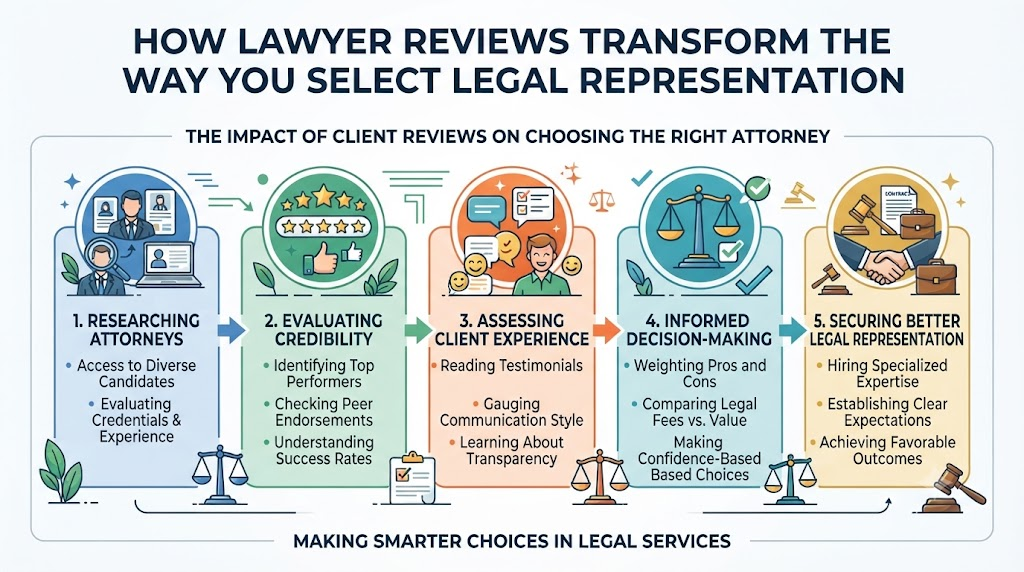
Finding yourself dealing with a legal issue can feel overwhelming, especially if it is your first time navigating the legal system. Whether you are facing a sudden property dispute, a workplace disagreement, or a business contract issue, staring at a screen full of legal professionals can leave you wondering whom to trust. Professional profiles list credentials, office locations, and practice areas, but they often leave out what it actually feels like to work with that individual day-to-day. This is where lawyer reviews become a valuable asset. Real-world feedback bridges the gap between official credentials and actual client experiences, offering insight into communication, responsiveness, and service quality. However, reviews should always be treated as one part of a wider, balanced decision-making process rather than the sole factor in hiring legal help.
What Lawyer Reviews Actually Tell You
Online lawyer reviews are shared accounts written by past clients detailing their experiences working with a legal professional. These reviews provide glimpses into everyday operational aspects that formal resumes omit. They typically discuss communication styles, responsiveness to phone calls and emails, office professionalism, organizational skills, clarity during initial consultations, and overall service quality. When you read through these notes, you are learning about an individual client’s unique interaction. A single account reflects one specific case and personality dynamic. Therefore, reviews serve best as qualitative context regarding service delivery rather than absolute proof of courtroom brilliance. They are never a substitute for checking professional qualifications, verifying active licensing, or discussing a legal matter directly through a consultation.
Why Lawyer Reviews Matter When Choosing Legal Help
Evaluating legal services before a first consultation is notoriously difficult for consumers. Unlike consumer goods or standard retail services, legal expertise involves complex technical rules, courtroom procedures, and nuanced strategy that are hard for a non-lawyer to assess online. Because you cannot easily measure a lawyer’s internal strategic skill through a website, client feedback steps in to provide context on service delivery. Reviews matter because they shed light on the working relationship. A brilliant legal mind who never returns phone calls or explains documents clearly can create immense anxiety during an already stressful legal challenge. Client feedback helps people create a well-informed shortlist of professionals who balance legal capability with dependable communication, making it much easier to narrow down options before making a final commitment.
What to Look for in a Good Lawyer Review
Detailed reviews provide far more value than brief, uninformative comments. While a simple five-star score offers a quick snapshot, a thorough written explanation gives context. Look for mentions of communication clarity, how promptly messages were answered, whether documentation was handled efficiently, and how the appointment environment felt. It is also helpful when reviews mention whether fees and billing structures were explained clearly from the start. Specific examples provide useful background about how an attorney manages client relations. However, keep in mind that even detailed reviews remain subjective accounts and should be evaluated with a healthy sense of perspective.
Look for Patterns Instead of One Review
Deciding on legal representation based on a single glowing recommendation or an isolated negative comment is risky. People have different expectations, and emotional stress can influence how clients perceive outcomes or administrative delays. Instead of focusing on outliers, look for repeated themes across multiple reviews. If several independent clients mention consistent delays in communication, disorganized billing, or exceptional responsiveness during high-pressure moments, those recurring patterns provide a reliable signal. Repeated criticism does not automatically prove misconduct or poor legal ability, but it does highlight operational habits worth investigating during your initial conversation.
Recent Reviews Can Provide Better Context
The age of a review matters significantly when you are researching legal support. Law practices evolve over time; attorneys hire new support staff, upgrade their communication systems, change office locations, or shift their primary areas of focus. Recent reviews generally provide a clearer picture of an attorney’s current client management and availability. Older reviews can still offer helpful background, particularly when they highlight long-standing professional habits or consistency over the years, but combining recent feedback with current profile details yields the most accurate picture.
Star Ratings Are Useful, But They Are Not Enough
Numerical ratings offer a convenient summary, but they hide important nuances. Two lawyers might both hold high star ratings while possessing completely different strengths, communication styles, or areas of focus. Relying entirely on a star average can lead you past a lawyer who is an exact fit for your specific case type just because their score is slightly lower due to an administrative misunderstanding. Reading the actual written feedback allows you to understand why past clients rated the professional the way they did.
What Lawyer Reviews Cannot Tell You
Understanding the boundaries of online feedback is essential. Lawyer reviews generally cannot establish whether a professional is the correct legal specialist for your unique set of facts, whether they are licensed to practice in your specific jurisdiction, or whether their proposed strategy is appropriate for your goals. Furthermore, legal outcomes depend heavily on objective facts, available evidence, applicable statutory laws, local court procedures, opposing counsel, and judicial decisions. No online review can predict or guarantee a successful legal outcome, no matter how glowing the praise may be.
Lawyer Reviews Compared with Other Selection Factors
| Selection Factor | What It Can Tell You | Why It Matters |
| Lawyer reviews | Client experiences and service-related feedback | Helps understand communication and client experience |
| Practice area | Type of law the lawyer focuses on | Helps match the lawyer to the legal issue |
| Relevant experience | Experience with similar matters | Helps assess whether the lawyer has handled comparable work |
| Professional credentials | Professional qualification and standing | Helps confirm suitability and legitimacy |
| Communication | How the lawyer explains and responds | Supports a productive working relationship |
| Fees | Cost and billing structure | Helps avoid unexpected financial misunderstandings |
| Availability | Ability to take on the matter | Helps determine whether the lawyer can realistically assist |
Balancing these elements is crucial. A strong, confident legal choice emerges when you weigh client feedback alongside credentials, practical experience, practice focus, and clear financial terms rather than elevating one single metric above all others.
How to Identify Useful Signals in Lawyer Reviews
When reading through feedback, pay close attention to recurring signals that point directly to day-to-day service standards. Note mentions of communication clarity, responsiveness during critical phases, professional demeanor, punctuality, office organization, transparent fee explanations, and overall client care. These signals help you formulate targeted questions for your initial consultation. Keep in mind that review comments highlight service experiences rather than verified technical competence, which should always be confirmed through direct discussion and credential checks.
Warning Signs to Watch for in Lawyer Reviews
While positive reviews highlight strengths, certain patterns serve as warning signs. Repeated complaints about unreturned phone calls, unexplained billing charges, confusing advice, or difficulty getting status updates deserve careful attention. At the same time, keep your perspective balanced: one angry review among dozens of positive ones does not automatically mean a lawyer is unreliable. Look for genuine patterns of negative behavior. Additionally, be cautious of suspiciously generic, overly promotional, or identical reviews, which warrant deeper independent research.
How to Spot Potentially Unreliable Reviews
Online reviews are occasionally subjective, incomplete, or misleading. Warning signs of questionable feedback include extreme, emotional claims that provide zero context, repetitive phrasing across different profiles, or comments that seem disconnected from actual legal procedures. Consumers should avoid judging authenticity solely by tone. Instead, cross-reference multiple sources and verify professional licensing information directly through official regulatory bodies.
Online Lawyer Reviews vs Personal Recommendations
Comparing online reviews with word-of-mouth recommendations from friends, family, or colleagues reveals distinct differences. Personal recommendations reflect trusted individual experiences, but the recommender’s legal issue may have been entirely different from yours. Online reviews, by contrast, offer a broader pool of client feedback across multiple cases, though they lack personal acquaintance. Using both methods together provides a well-rounded perspective.
How Reviews Can Help You Prepare for a Lawyer Consultation
Review research acts as a practical preparation tool for your initial meeting. If multiple reviews note that communication is fast and structured, you can focus your questions on how status reports are delivered. If past clients mention billing transparency, you can ask for a written breakdown of retainer fees and hourly rates. Using reviews to shape your questions ensures a productive, targeted consultation.
How BestLawyerNow Can Help You Compare Lawyers
Navigating the legal landscape requires structured research tools. Platforms like BestLawyerNow assist users by organizing lawyer profiles, practice areas, location details, reviews, and consultation options into an accessible format. An organized legal discovery platform streamlines the process of evaluating multiple attorneys side-by-side rather than settling on the first name you encounter. By connecting directory features with comprehensive review insights, the platform helps consumers approach their legal search with structure and confidence, without guaranteeing specific outcomes or service quality.
A Simple Process for Choosing a Lawyer Using Reviews
- Identify the exact nature of your legal issue or dispute.
- Search for legal professionals who specialize in that specific practice area.
- Examine professional profiles to check basic background and location.
- Read multiple detailed reviews to gauge communication and client service trends.
- Look for consistent patterns rather than relying on single ratings.
- Verify active professional credentials and jurisdictional licensing.
- Compare consultation formats and fee structures.
- Prepare specific questions based on your research.
- Speak directly with suitable candidates during an initial consultation.
- Make your final hiring decision based on the complete picture.
Common Mistakes People Make When Reading Lawyer Reviews
Relying exclusively on a star rating, making decisions based on a single review, ignoring review dates, or overlooking a lawyer’s core practice area are frequent missteps. Assuming positive feedback guarantees a specific legal victory or ignoring formal credentials can also lead to poor choices. Treating reviews as informative research data rather than infallible verdicts prevents these errors and promotes sound decision-making.
Why Balanced Research Leads to Better Legal Decisions
Choosing legal representation successfully requires looking far beyond a digital reputation score. Combining client reviews with practice area expertise, verified credentials, jurisdictional standing, transparent fee structures, and responsive communication ensures you find the right fit. Balanced research empowers consumers to enter consultations with realistic expectations, clear questions, and confidence tailored to their unique circumstances.
Frequently Asked Questions
- Why are lawyer reviews useful when choosing a lawyer? Lawyer reviews offer practical insight into an attorney’s communication style, responsiveness, professionalism, and client service experience that formal resumes rarely show.
- What should I look for in a lawyer review? Look for specific details about responsiveness, organizational clarity, appointment punctuality, fee transparency, and how well expectations were managed.
- Are star ratings enough to choose a lawyer? No. Star ratings provide a quick numerical summary but hide crucial context regarding communication styles, specific case types, and individual client needs.
- Should I trust a lawyer with only a few reviews? A low review count does not indicate a bad lawyer; it simply means less public feedback is available, requiring you to rely more heavily on direct consultations and credentials.
- Are recent lawyer reviews more useful? Yes. Recent reviews reflect current office management, staff stability, and modern communication standards more accurately than older comments.
- Can lawyer reviews tell me whether a lawyer is qualified? No. Reviews highlight client service experiences, not technical legal competence, licensing status, or courtroom specialization, which must be verified independently.
- How can I identify potentially unreliable lawyer reviews? Warning signs include overly emotional claims with zero context, identical phrasing across multiple profiles, or comments that appear disconnected from real legal procedures.
- Should I compare lawyer reviews with personal recommendations? Combining online reviews with personal recommendations from trusted sources provides a broader, more balanced range of perspectives.
- What other factors should I consider besides lawyer reviews? You should also evaluate practice area expertise, professional credentials, jurisdictional licensing, relevant case experience, communication style, and fee structures.
- How can BestLawyerNow help me compare lawyers? BestLawyerNow helps simplify your search by organizing lawyer profiles, practice areas, location details, client reviews, and consultation options in one accessible place.
Final Thoughts on Navigating Client Feedback
Online feedback serves as a vital bridge between professional credentials and everyday client realities. When approached with a critical eye, reviews provide deep insights into how a legal professional communicates, handles client matters, and manages expectations throughout a case. However, because reviews primarily capture individual service experiences rather than legal technical competence or guaranteed results, they must always be balanced against core professional criteria. By evaluating practice areas, relevant experience, verified credentials, jurisdictional licensing, fee transparency, and direct communication alongside client feedback, you position yourself to make a well-rounded and confident choice. Platforms like BestLawyerNow assist in bringing these essential research elements together into one organized space, empowering you to approach your initial consultations thoroughly prepared and ready to find the ideal advocate for your legal needs.