
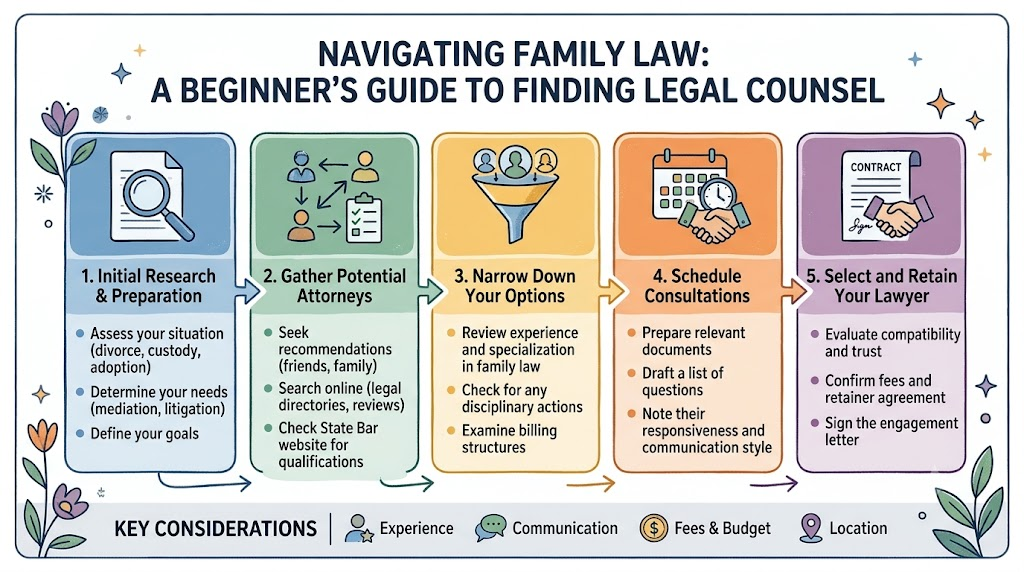
Introduction
Facing a family-related legal matter can feel overwhelming, especially when you are navigating the process for the first time. Whether you are dealing with a separation, trying to understand child custody arrangements, or seeking clarity on financial support issues, the uncertainty can bring significant stress. Many people find themselves unsure of where to turn, how the legal system works, or what qualities make a professional right for their specific needs.
Choosing a legal representative is an important decision, but the terminology, fee structures, and consultation processes can seem complex to a beginner. This guide is designed to help you navigate the process with confidence. It offers practical, step-by-step information on identifying your legal needs, preparing for initial meetings, comparing professionals, and understanding what to expect during a consultation.
While every family’s situation is unique, knowing how to approach your search can make the process clearer and less intimidating. If you are ready to begin researching legal professionals and exploring your options, platforms like BestLawyerNow.com can serve as a helpful starting point to discover qualified practitioners in your area.
Main Article
What Is a Family Lawyer?
A family lawyer is a legal professional who specializes in legal matters related to domestic relationships, marriage, separation, and children. In plain English, these professionals help clients understand their rights, prepare formal legal documents, negotiate agreements, and navigate court procedures if formal litigation becomes necessary. The scope of a family lawyer’s work varies depending on their practice focus, your specific needs, and local laws.
Some lawyers focus heavily on mediation and collaborative negotiation, helping families resolve disputes outside the courtroom. Others spend much of their time representing clients in formal court proceedings. It is important to understand that hiring a lawyer does not mean your family disagreement will automatically escalate to a trial. In many cases, the primary role of legal counsel is to help you negotiate a fair settlement, draft enforceable agreements, and provide objective guidance during a difficult transition.
Common Reasons to Hire a Family Lawyer
Family law encompasses a wide variety of legal situations. While some people seek legal help only during a major life transition, others consult a lawyer to plan for the future or protect their interests before entering a marriage or partnership.
Common situations that prompt people to seek legal guidance include:
- Divorce and legal separation
- Child custody, parenting time, and decision-making arrangements
- Child support calculations and modifications
- Spousal support (alimony) determinations
- Adoption and guardianship proceedings
- Prenuptial, postnuptial, and cohabitation agreements
- Family property division and debt allocation
Each of these matters involves specific legal rules, financial disclosures, and documentation requirements. Having professional guidance can help ensure that your rights are protected and that agreements are legally sound.
When Should You Consider Hiring a Family Lawyer?
Knowing when to seek professional help can save you time, money, and emotional stress. While minor questions can sometimes be answered through self-guided research, certain situations strongly benefit from early legal consultation.
You should consider consulting a lawyer if:
- You are facing complex financial assets, business ownerships, or shared debts that require careful division.
- There is a major disagreement regarding parenting arrangements or the relocation of a child.
- Your legal rights, responsibilities, or obligations are unclear.
- You have been served with formal legal papers, notices, or court summons.
- You need important legal documents drafted, reviewed, or signed.
- You are approaching strict legal deadlines or response windows set by a court or opposing counsel.
Early advice often helps you understand your options before you make permanent decisions. If you are dealing with immediate safety concerns or threats of domestic harm, personal safety comes first, and you should reach out to local emergency services or specialized support organizations right away.
Understand Your Legal Needs Before Searching
Before you begin reaching out to legal professionals, it is helpful to clarify what you want to achieve. Take time to write down the core issues you are facing.
Do you need help drafting a separation agreement, resolving a support dispute, or understanding your custody rights? Identifying your main concerns helps you narrow your search and find a lawyer whose practice specifically matches your needs.
For instance, if your primary goal is to negotiate a peaceful parenting plan through mediation, you will want to look for a practitioner who emphasizes collaborative dispute resolution rather than aggressive courtroom litigation. If your situation involves multiple overlapping issues—such as property division, business assets, and spousal support—make a comprehensive list of these topics so you can discuss the full scope of your situation during your initial consultations.
How to Find a Suitable Family Lawyer
Finding the right professional requires looking beyond flashy advertisements. There are several reliable ways to begin your search:
- Professional Directories: Reputable online directories can help you locate licensed practitioners in your region. Platforms such as BestLawyerNow.com allow you to explore legal professionals and review basic practice details in one convenient place.
- Referrals: Ask trusted friends, family members, or colleagues if they have had positive experiences with local family law professionals.
- Local Legal Associations: Bar associations and official legal societies often maintain public referral services that list authorized practitioners.
- Official Regulator Directories: Many jurisdictions have online registries maintained by governing bodies where you can verify a lawyer’s active licensing status.
When reviewing potential sources, always verify qualifications through official channels to ensure the practitioner is authorized to practice in your jurisdiction.
Check Qualifications, Licensing, and Relevant Experience
Not all lawyers have the same background. When evaluating a professional, confirm that they are fully licensed and in good standing with the appropriate governing body in your area.
Beyond general licensing, look closely at their relevant experience. Family law is a broad field, and a lawyer who primarily handles corporate law or criminal defense may not have the specialized knowledge required for a complex custody dispute or asset valuation.
Ask potential candidates how long they have practiced family law and whether they frequently handle cases similar to yours. Checking reliable online directories and official regulatory records can also help you confirm their professional standing and ensure there are no active disciplinary actions against them.
Choose a Lawyer Who Handles Your Type of Case
Because family law covers many different areas, finding someone whose daily practice aligns with your needs is essential. For example, a lawyer who focuses on high-net-worth divorces and corporate asset division will bring a different skill set than one who dedicates their practice to adoption and guardianship proceedings.
During your initial discussions, ask the lawyer about their familiarity with your specific type of case. A lawyer who understands the nuances of your particular legal issue will be better equipped to anticipate potential hurdles, explain realistic timelines, and guide you toward practical solutions.
Read Lawyer Reviews Carefully
Online reviews can provide valuable insights into a lawyer’s communication style, responsiveness, and office professionalism. When reading reviews, look for consistent patterns rather than focusing on a single glowing recommendation or an isolated negative comment.
Pay attention to comments regarding how responsive the lawyer’s office is, whether clients felt heard and respected, and if billing practices were transparent.
Keep in mind that reviews are subjective and reflect individual experiences. A positive review from one client does not guarantee that you will achieve the same legal outcome, nor does a negative review automatically mean a lawyer is unqualified.
Understand Family Lawyer Fees and Costs
Legal fees are often one of the biggest concerns for beginners. Costs can vary widely depending on your geographic location, the complexity of your case, the urgency of the matter, and the lawyer’s level of experience.
Common billing structures include:
- Hourly Rates: You are billed for the actual time the lawyer and their staff spend working on your file.
- Retainers: An upfront advance payment placed in a trust account, from which the lawyer draws as legal work is performed.
- Fixed Fees: A set price for specific, well-defined services, such as drafting a straightforward prenuptial agreement.
Always ask for a clear, written fee agreement before work begins. Clarify what is included in the quoted price and whether additional expenses—such as court filing fees, expert witness costs, or document preparation charges—will be billed separately.
Prepare for Your First Family Lawyer Consultation
An initial consultation is your opportunity to evaluate the lawyer and help them understand your situation. Proper preparation can make this meeting much more productive.
To prepare for your consultation:
- Create a Timeline: Write down a chronological summary of key events, dates, and discussions relevant to your dispute.
- Gather Documents: Collect relevant financial statements, tax returns, correspondence, property deeds, or existing legal agreements.
- Prepare a List of Questions: Write down your most important questions regarding strategy, timelines, and fees.
- Be Honest: Provide complete and accurate information. Hiding difficult facts can harm your case and prevent the lawyer from giving you sound advice.
Before sending sensitive documents via email or online forms, ask the lawyer’s office how they secure confidential information.
Questions to Ask Before Hiring a Family Lawyer
Asking targeted questions during your initial meeting helps you compare candidates and make an informed choice. Consider asking:
- What is your direct experience with family law matters similar to mine?
- Are you fully authorized to practice in my jurisdiction?
- What legal options and strategies might be available in my situation?
- What documents and information do you need me to gather?
- What are your fee structures, and what expenses are covered?
- Will my case be handled primarily by you or by other associates?
- How and when can I expect you to communicate updates?
- What are the next steps, and are there any urgent deadlines?
- What are the potential risks and benefits of the approaches we discuss?
Remember that ethical lawyers will never guarantee a specific legal outcome or court ruling.
Compare Lawyers Before Making Your Decision
Choosing the first lawyer you speak with is rarely necessary unless your situation is an extreme emergency. Whenever possible, consult with two or three different professionals.
Compare them based on their communication style, fee transparency, relevant experience, professional standing, and how comfortable you feel talking to them.
The right lawyer should listen attentively, explain complex legal concepts in simple terms, and offer a balanced view of your options without pressuring you into hasty decisions.
Understand the Difference Between Consultation and Hiring
It is important to understand that scheduling an initial consultation does not automatically mean you have hired the lawyer, nor does it mean the lawyer has agreed to represent you on an ongoing basis.
A consultation is primarily an exploratory meeting to discuss your legal issue, evaluate compatibility, and understand potential strategies.
Formal representation begins only after you review and sign a retainer or service agreement. Read this agreement carefully to ensure you understand the scope of services, fee arrangements, and mutual responsibilities before signing.
Can a Family Dispute Be Resolved Without Going to Court?
Many people assume that hiring a lawyer guarantees a courtroom battle, but the vast majority of family law matters are resolved outside of court. Through negotiation, direct discussions, or structured mediation, couples often reach mutually acceptable agreements without trial.
Mediation involves a neutral third party who helps both sides communicate and explore potential solutions.
While out-of-court resolution saves time and emotional energy, it is not appropriate for every situation. If there is a history of coercion, hidden assets, or safety concerns, court intervention may be necessary to protect your rights. A qualified lawyer can help you determine which approach fits your circumstances.
How to Work Effectively With Your Family Lawyer
Once you hire a lawyer, maintaining a strong, cooperative working relationship is vital. You can help your case run smoothly by:
- Communicating clearly and honestly about all facts relevant to your matter.
- Responding to requests for documents or information in a timely manner.
- Keeping your documents organized and easy for your legal team to review.
- Asking for clarification whenever you do not understand legal terms or next steps.
- Maintaining realistic expectations about timelines and legal processes.
Keeping copies of all correspondence and following your lawyer’s guidance regarding communication procedures will help keep your case on track.
Common Mistakes Beginners Should Avoid
First-time clients often make avoidable missteps during the hiring and legal process. Being aware of these pitfalls can help you protect your interests:
- Choosing Solely on Price: Hiring the cheapest lawyer can lead to poor communication or a lack of relevant experience. Balance cost with qualifications.
- Hiding Relevant Facts: Omitting difficult or uncomfortable details makes it impossible for your lawyer to prepare an effective strategy.
- Ignoring Deadlines: Missing court dates or document submission deadlines can severely damage your position.
- Assuming Laws are Universal: Relying on advice found online without checking local jurisdictional rules can lead to costly mistakes.
- Failing to Clarify Fees: Entering a professional relationship without a written fee agreement often leads to unexpected financial surprises.
By approaching your search methodically, you can avoid these common errors and find a professional who truly supports your needs.
How BestLawyerNow.com Can Help You Start Your Search
Beginning your search for legal counsel does not have to be confusing. Platforms designed to connect individuals with legal professionals can streamline the early research phase.
BestLawyerNow.com provides a structured space where you can explore legal professionals and review information across various practice areas.
When utilizing online resources, start by identifying your specific legal issue, reviewing professional profiles, and checking relevant qualifications.
Use available consultation options to ask direct questions about experience, fees, and jurisdictional expertise. While no online platform can guarantee a specific match or legal outcome, using a reputable discovery tool can help you take that crucial first step toward informed legal guidance.
A Simple Checklist Before Hiring a Family Lawyer
Use this quick checklist to review your progress before making your final hiring decision:
- Clearly identified your primary family law concern.
- Verified the lawyer’s licensing and professional credentials.
- Confirmed their specific experience with cases similar to yours.
- Read client feedback and reviews for consistent professionalism.
- Discussed billing methods, retainers, and potential extra costs in writing.
- Gathered and organized your initial documents and timeline.
- Asked about communication policies and update frequency.
- Read and understood the formal service or retainer agreement.
- Noted any upcoming legal deadlines or response dates.
Making a Confident and Informed Hiring Decision
Selecting a family lawyer is a personal and significant choice. By focusing on professional qualifications, relevant practice experience, transparent fee structures, and clear communication, you set a strong foundation for your legal journey.
While no guide or checklist can predict the exact outcome of a family law matter, thorough research and careful preparation empower you to make choices that serve your best interests.
Take your time, ask the right questions, and seek qualified legal guidance when you are ready to move forward.
Comparison Table
| Factor | What to Check | Why It Matters |
| Qualifications | Professional authorization and relevant credentials | Helps confirm the lawyer can practise in the relevant jurisdiction |
| Experience | Work involving similar family law matters | Helps assess whether the lawyer’s background fits the issue |
| Communication | Clarity, responsiveness, and explanations | Helps clients understand the process and next steps |
| Fees | Billing method, included services, and extra costs | Reduces confusion about legal expenses |
| Availability | Ability to manage the matter and meet relevant deadlines | Helps ensure the lawyer can provide the required support |
| Approach | Explanation of possible options and risks | Helps the client make informed decisions |
| Reviews | Consistent feedback from available sources | Provides additional context, though not a guarantee |
10 FAQs
- What does a family lawyer do?
A family lawyer helps clients navigate domestic legal matters such as divorce, child custody, support payments, and property division by providing legal advice, drafting documents, negotiating settlements, and representing clients in court if necessary. - When should I hire a family lawyer?
You should consider hiring a family lawyer when facing a separation, complex financial division, disputed parenting arrangements, formal court notices, or when you need important legal agreements drafted and reviewed. - How do I choose the right family lawyer for my situation?
Look for a professional with verified credentials, specific experience in your type of case, transparent fee structures, clear communication skills, and an approach that aligns with your goals. - What qualifications should I check before hiring a family lawyer?
Verify that the lawyer holds an active license to practice in your jurisdiction, check their standing with official regulatory bodies, and ensure they have a proven background in family law. - How much does a family lawyer cost?
Costs vary based on your location, case complexity, and the lawyer’s experience. Lawyers typically bill using hourly rates, fixed fees for specific services, or upfront retainers. - What should I bring to my first family lawyer consultation?
Bring a written timeline of events, relevant financial documents, tax returns, existing legal agreements, a list of your primary concerns, and prepared questions about strategy and fees. - What questions should I ask before hiring a family lawyer?
Ask about their experience with similar cases, jurisdictional licensing, potential legal strategies, estimated costs, communication policies, and who will be handling your file. - Can a family lawyer help resolve a dispute without going to court?
Yes, many family law matters are successfully resolved outside of court through direct negotiation, collaborative law, or mediation. - Can I consult a family lawyer online?
Many legal professionals offer initial consultations via video or phone calls, making it convenient to discuss your situation remotely before committing to formal representation. - Does an initial consultation mean I have hired the lawyer?
No, an initial consultation is an exploratory meeting to discuss your case and evaluate fit. Formal representation begins only after you sign a service or retainer agreement.
Legal Disclaimer
This article is for general informational and educational purposes only and does not constitute personalized legal advice. Reading this content does not create an attorney-client relationship. Family law varies significantly by jurisdiction and individual circumstances. You should consult a qualified, licensed lawyer in your local area to discuss your specific legal needs.
Choosing the Right Family Lawyer With Confidence
Navigating a family law matter for the first time requires careful thought, preparation, and reliable guidance.
By taking the time to identify your legal needs, check professional credentials, understand fee structures, and prepare thoroughly for initial consultations, you can make informed decisions that protect your interests.
Platforms like BestLawyerNow.com offer a convenient starting point for exploring legal professionals and discovering consultation options in your area.
As you take your next steps, remember that having the right professional by your side can help bring clarity and peace of mind during challenging times. Always seek qualified, jurisdiction-specific legal advice tailored to your unique situation.
Final Thought
Ultimately, embarking on a legal journey for the first time is not just about resolving a dispute—it is about reclaiming stability and protecting your future well-being. Legal procedures can seem intimidating at first glance, but breaking the process down into manageable steps transforms uncertainty into actionable clarity. By prioritizing open communication, verifying professional expertise, and remaining grounded in realistic expectations, you equip yourself to navigate even the most complex family transitions with grace and confidence. Remember that seeking knowledgeable guidance is a powerful act of self-care, ensuring that you do not have to walk through life’s pivotal crossroads alone.