
Introduction
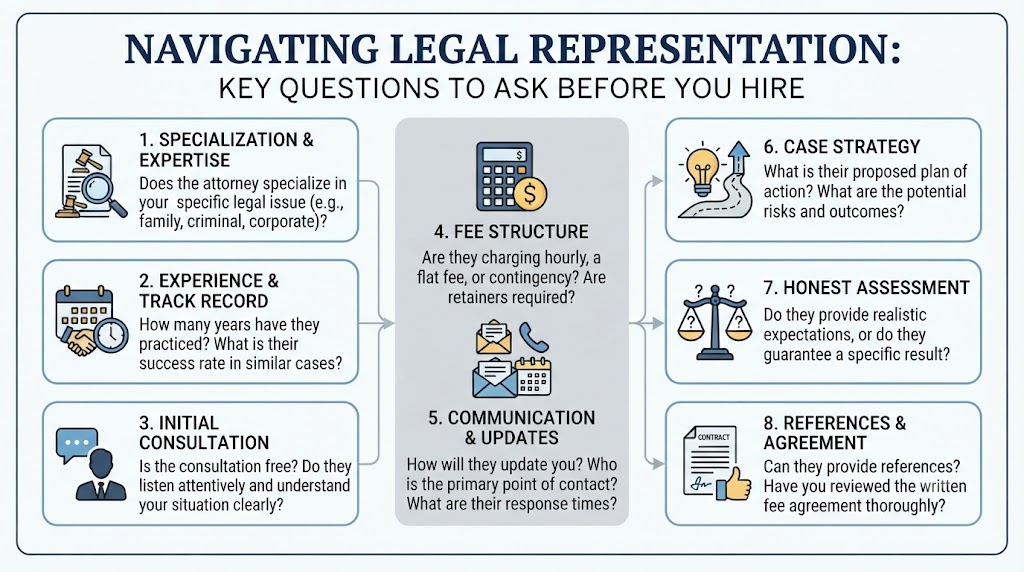
Choosing the right attorney is one of the most critical steps you can take when facing a legal issue, starting a business, or resolving a personal dispute. Legal matters often feel stressful and unfamiliar, especially for anyone navigating the legal system for the first time. Many people make the mistake of hiring the first lawyer they encounter or signing a retainer agreement without fully understanding what lies ahead. Taking the time to ask structured, purposeful questions during an initial consultation empowers you to protect your interests, understand the road ahead, and select a legal professional who is genuinely suited to your needs.
Why It Is Important to Ask Questions Before Hiring an Attorney
Legal matters are rarely straightforward. Whether you are dealing with a complex family dispute, drafting a commercial contract, or managing a personal injury claim, the decisions you make at the outset can profoundly shape the final outcome. Law and court procedures involve intricate rules that are exceptionally difficult to navigate without professional counsel. At the same time, attorneys possess specialized backgrounds, meaning that one lawyer’s expertise in criminal defense does not qualify them to handle a corporate merger or a real estate closing. Asking detailed questions before hiring ensures that you fully understand the services you are purchasing and what specific responsibilities remain yours. Furthermore, establishing clear communication expectations and fee transparency from the very beginning prevents misunderstandings, financial surprises, and unnecessary anxiety as your case progresses. Asking the right questions sets a collaborative, transparent foundation for the attorney-client relationship.
Know What Type of Legal Help You Need
Before reaching out to law firms, it helps to identify the core nature of your legal challenge, as different problems require distinct areas of legal expertise. Common practice areas include family law for divorce and custody matters, personal injury law for accident compensation, employment law for workplace disputes, and business law for corporate formation and contracts. Other specialized areas include real estate law, immigration law, criminal defense, and estate planning. The ideal attorney for your situation depends heavily on the specific legal issue at hand and your geographic location. Taking a moment to define your primary legal need ensures you target professionals whose daily practice aligns directly with your circumstances.
Best Questions to Ask About an Attorney’s Experience
An attorney’s professional background and practical history heavily influence how efficiently and effectively they manage a case. During your initial consultation, inquire about their years in practice, how frequently they handle cases sharing similarities with yours, and the types of clients they typically represent. It is also valuable to ask whether they have direct experience practicing in the specific courtrooms or jurisdictions where your matter will be heard. While extensive experience is a strong indicator of competence, remember that years in practice alone do not guarantee that a particular lawyer is the best fit for your unique situation.
Questions About the Attorney’s Legal Services
Defining the scope of legal services prevents costly misunderstandings down the road. You should ask precisely what legal tasks the attorney is prepared to undertake, whether they will manage the entire lifecycle of your case or only specific phases, and who within the firm will perform the day-to-day work.
Many law firms leverage junior associates, paralegals, or specialized administrative staff for document preparation and research, so clarifying who handles your file is essential. Additionally, you should request a clear delineation of what work is included in the representation agreement versus what tasks or secondary services fall outside the scope and require separate compensation.
Questions About Attorney Fees and Costs
Financial clarity is vital when engaging professional services, and legal fees can vary widely based on the complexity of the matter, geographical location, and the attorney’s pricing structure. Ask whether the lawyer charges flat fees, hourly rates, or contingency fees, and request a realistic estimate of total anticipated hours if an hourly model applies.
Beyond direct legal fees, inquire about auxiliary expenses such as court filing fees, expert witness retainers, copying charges, and travel costs. You should also understand how and when billing statements are delivered, what payment options are accepted, and how unexpected case complications or delays might impact your overall financial commitment.
Questions About Communication
Reliable communication bridges the gap between client anxiety and peace of mind during legal proceedings. Because different law offices maintain distinct communication styles and response times, you should clarify whether phone calls, emails, or secure client portals are preferred.
Ask who will directly answer your routine questions—whether it is the primary attorney or a dedicated case manager—and inquire about the firm’s standard window for returning messages. Establishing how frequently you will receive regular case updates and how critical developments will be communicated ensures you remain informed throughout the process.
Questions About Your Legal Case
An attorney requires the complete and unvarnished facts before offering tailored guidance. Ask the lawyer to identify the core legal issues present in your case, outline what information and documentation they need from you, and explain the immediate next steps.
It is equally important to discuss potential obstacles or complications that frequently arise in similar matters, as well as the specific decisions you will be expected to make as the case evolves. Having a clear view of your own responsibilities helps build a productive working partnership from day one.
Questions About the Legal Process
Every legal procedure moves at its own pace, influenced heavily by the nature of the dispute and the governing jurisdiction. Asking about the general roadmap helps demystify what happens immediately after hiring counsel, what the first formal filing entails, and how long the entire process might reasonably take.
You should also discuss whether your matter is likely to settle out of court or proceed to a formal trial, and whether alternative dispute resolution avenues are available. Recognizing that every legal matter is distinct prevents unrealistic expectations regarding timelines.
Questions About Possible Outcomes
Clients naturally desire insight into how their case might conclude, but it is essential to remember that no attorney can ethically promise a specific legal result. Discussions regarding outcomes should focus on exploring best-case, worst-case, and most probable scenarios, along with the various risk factors that could influence the final trajectory of the matter. Understanding these variables allows you to make calculated decisions with your eyes open.
Questions to Ask Before Signing an Agreement
Before putting pen to paper on any fee contract or retainer agreement, read the document thoroughly. Verify that all promised services, billing terms, fee structures, and auxiliary costs match what was discussed verbally.
Pay close attention to clauses regarding communication commitments, client responsibilities, handling of deadlines, and the procedures for ending the attorney-client relationship if circumstances change. Never sign an agreement if you feel rushed or if any clause remains unclear.
How to Prepare for an Attorney Consultation
Maximizing the value of your initial consultation requires careful preparation. Before your meeting, write down your primary questions, organize a chronological timeline of events, and gather relevant documentation such as contracts, notices, police reports, or financial records. Compile a list of key individuals and witnesses connected to your dispute, write down your core concerns, and ensure you bring specific inquiries regarding fees and communication protocols. Good preparation ensures your meeting remains focused and productive.
How to Compare Different Attorneys
When consulting with multiple candidates, an objective comparison helps clarify your choice. Evaluate each professional based on their relevant experience, alignment with your specific area of law, communication effectiveness, fee transparency, office location, and overall responsiveness. Review client feedback where appropriate to gauge past performance, but ultimately choose the practitioner who inspires trust and aligns best with your personal comfort level.
Questions About Attorney Qualifications
Evaluating credentials provides a baseline for assessing professional competence. You may inquire about an attorney’s law school background, their active licensing and good standing within your jurisdiction, the percentage of their practice dedicated to your specific legal issue, and their involvement in professional legal associations. While credentials do not replace a personal evaluation of fit, they confirm baseline professional legitimacy.
Questions About Location and Court Experience
Jurisdiction matters immensely in legal proceedings, as municipal, state, and federal rules differ significantly. Confirm that the attorney is licensed to practice in your state, maintains familiarity with the specific local courts or administrative bodies involved, and regularly handles matters within your geographic area. Local court familiarity can often streamline procedural steps.
Questions About Confidentiality and Privacy
Safeguarding sensitive personal and financial data is paramount during any legal conflict. Inquire about the firm’s data security protocols, how digital documents are securely shared, which staff members will have access to your case records, and how private communications are protected against unauthorized disclosure.
Questions About Other Options
Litigation is not always the sole path to resolution. Depending on your situation, you can ask whether alternative dispute resolution methods—such as direct negotiation, formal mediation, or binding arbitration—might achieve your goals more efficiently and amicably than a traditional court battle.
Warning Signs to Consider Before Hiring an Attorney
While the vast majority of legal professionals maintain high ethical standards, certain red flags should prompt caution. Be wary of vague or evasive fee structures, guarantees of specific outcomes, pressure to sign agreements immediately without review, persistent difficulties in communication, or an unwillingness to explain basic legal concepts. Trust your instincts if something feels unprofessional.
How BestLawyerNow.com Fits Into the Attorney Search
Navigating the legal landscape can feel intimidating when you are unsure where to begin your search. Platforms like BestLawyerNow.com are designed to help individuals explore attorney options, compare professional backgrounds, and access educational resources before making a hiring decision. By offering searchable directories and informative guides, BestLawyerNow.com helps streamline your initial research so you can approach legal consultations with clarity and confidence.
Frequently Asked Questions
- What questions should I ask before hiring an attorney?You should ask about their experience with similar cases, the scope of their legal services, how they bill for fees and costs, their communication style, and what next steps to expect.
- How should I ask an attorney about fees?Be direct and ask for a complete breakdown of their fee structure, whether they charge hourly or flat rates, what additional costs to expect, and when bills are due.
- What experience should I ask an attorney about?Ask how long they have practiced law, how often they handle cases similar to yours, and whether they are familiar with local courts in your area.
- Should I ask an attorney if they have handled cases like mine?Yes. Asking about past experience with similar legal issues helps you determine if their daily practice aligns with your specific needs.
- What should I ask about communication?Ask how quickly they generally respond to messages, who will be handling your day-to-day questions, and how often you will receive case status updates.
- What documents should I bring to an attorney consultation?Bring any contracts, letters, notices, police reports, financial records, or timelines that relate directly to your legal issue.
- Should I ask about the expected legal process?Yes. Understanding the typical steps, potential delays, and alternative dispute resolution options helps you prepare for what lies ahead.
- Can an attorney guarantee the result of my case?No. Ethical attorneys cannot guarantee a specific legal outcome because every case involves unique facts and unpredictable legal variables.
- What should I check before signing an attorney agreement?Review the listed services, fee amounts, payment terms, cancellation policies, and client responsibilities to ensure everything matches what was discussed.
- How can I compare different attorneys?Compare their relevant experience, communication style, fee transparency, office location, and client reviews to decide which professional best fits your needs.
Conclusion
Asking the right questions before hiring an attorney is an essential step toward safeguarding your interests and securing the right professional partnership. By understanding an attorney’s background, clarifying fee structures, defining service scopes, and establishing reliable communication channels, you can make an empowered, informed choice. Take your time to review retainer agreements thoroughly, prepare carefully for consultations, and evaluate your options without rushing. Explore the resources available on BestLawyerNow.com to help guide your search and approach your legal journey with confidence.